Back to the Future's Uncredited Source?

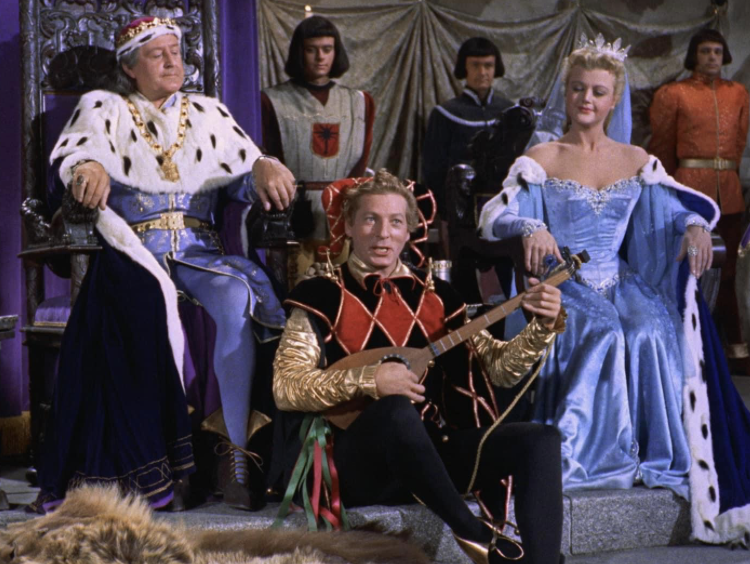
Circa 1990, my fifth grade teacher told our class that he believed the writers of Back to the Future took from his time travel novel, It’s About Time (later published as Trapped in Time). Mr. Payne’s book was published eighteen months before Back to the Future’s release. Not only are the two stories similar but Payne and one of Back to the Future’s writers hail from the same city. I reflect on Mr. Payne’s claim as well as the broader topic of plagiarism HERE.

The Writing Process

Mark Twain once apologized for a long letter, explaining he didn’t have time to write a short one, and Shakespeare calls “brevity the soul of wit.”

Milchick’s struggle is the writer’s struggle.

Tempering Politics

(Note: this is an email sent to our church on November 7, 2024.)

As we come off another presidential election there's plenty to reflect upon. (What do the emerging voting patterns say about broader changes in America? How did Trump win so big? How did the polling data get things so wrong again? What are we to make of the ever-widening gap between the media and everyday Americans? And on and on).

I’d like to provide a word of caution for Christians as it relates to politics:

The temptation for American Christians is making too much of politics, thinking it the end all be all. For Christians in America, political idolatry usually begins by reading the “holy nation” language of the Bible, language that's referring to Israel (and now the Church), and misapplying it to America.

This is not to say we do not love America or are thankful for our freedoms (though, as a previous email explains, we're generally confused on what freedom means). The few times I have returned home from being overseas, for example, one of my happiest experiences is getting back on American soil. Our country is special. Serving the nation is a good thing, including those serving politically - we need more Christians serving in the political sphere not less.  

But the kingdom that ultimately matters and will last is Christ’s, not America. America will be shelved alongside the other once-great kingdoms of this world as Christ’s Kingdom overwhelms them all.

And his Kingship is acquired not by the bombast, mud-slinging, and flexing required of our political candidates, his Kingship comes via meekness. I am afraid this is lost on too many Christians. 

So let’s be good citizens, pray for our leaders, the president, our nation, and strive to lived quiet lives, work hard, and mind our own affairs (1 Thess 4:11). Let’s keep the cross and its power (deemed weak and foolish by the world) the orienting center of our lives, not the political sphere.

Walter Martin, Niggle, and the Creative's Struggle

Click HERE for thoughts on the creative’s struggle that draws upon Walter Martin’s “The Song Is Never Done,” Tolkien’s Leaf by Niggle, and the Holy Scriptures.

On Middle Age & its Crises

I recently heard someone describe a person’s teens, 20s, and 30s as a season of sowing. Middle age and beyond is a season of reaping. The so-called mid-life crisis often stems from the realization that what one is reaping is not what they had hoped for in their years of sowing.

Proverbs 4:18 reads:

“The path of the righteous is like the light of dawn, that shines brighter and brighter until the full day.”

Think about that. The way of the righteous gets more and more compelling as time (“the day”) tumbles on. In one’s teenage years, for example, the way of the righteous seems incomprehensible, even foolish. But as one enters their sowing years (usually middle age and beyond) the wisdom of the righteous path grows more evident.

It's Not Just Freedom From, But Freedom To

Note: this is a slightly revised email sent to our church on July 5, 2024.

Happy 4th!

Let’s talk freedom.

I believe our nation is generally confused about the topic. We think of freedom as an end not a means. We think of ourselves as free from things, but never free to things. Think of the times you’ve heard someone say (with a touch of defiance): “It’s a free country, I can do what I want.”

Freedom doesn’t mean you are free to do whatever you want. If it does, you have just given yourself over to the most oppressive form of enslavement: you have shackled yourself to yourself (your ruthless passions and desires). 

Freedom ought to mean you are free to do the right thing.

Let’s consider the Exodus story. This is the great freedom story that hovers in the background of our thinking. (It’s astounding the degree to which this story has shaped those on the left and right, those secular and religious).

Here’s what we get right about the story: God takes an exploited and oppressed people (Israel) and sets them free from their tyranny in Egypt.

Here’s what we forget: Isreal’s freedom from Egypt meant freedom to serve the Lord.

Israel isn’t freed to just do “whatever the heck they want,” they are freed to serve the Lord. In fact, the Hebrew word “abad,” which described their enslavement in Egypt, is the same word used to describe their new task as freed people: “abad” (or enslave themselves to) the Lord (Exodus 8:1).

Freedom from means freedom to.  

As I see it, in America, we have the “freedom from” part down, we’ve forgotten the “freedom to” part. We don't want to think of our freedom as demanding (and being sustained by) obligations to our communities, work, families, the next generation, and so on.

This is why, as many have pointed out, liberal societies (like America) need illiberal institutions (like churches, synagogues, mosques, family, service organizations, etc) to sustain them. Why?

Because freedom from always means freedom to something.

These illiberal institutions have been eroding steadily for decades, which begs the question of how much longer this American project can be sustained. Looking at the current political situation (captured well in last week’s presidential debate), it’s easy to be disillusioned. Has our obsession with freedom from combined with no sense of what that freedom is for or to created a perfect storm for the demise of democracy. Time will tell.

I do know this: early Americans (the Founders and others) were nervous about the project they were undertaking and recognized the importance of illiberal institutions (like churches and schools) to be firmly in place as trellis for freedom, which is fragile apart from any supporting trellis.

I don’t want to sound too dire. I love our country! Our church loves our country. I am thankful for the many in our church who serve our nation in some way or form. We pray for you. We are commanded to be good citizens. We pray for our leaders and we are involved in the political process. 

However, I want us to avoid placing too much hope in our country or politics. Nations rise and fall, but the Church is unstoppable. Christ is King and he will set things right. Our hope is in him. Our ultimate allegiance is to the Church for which he died.

For those seeking freedom, there is one pathway: Jesus. He’s the Greater Moses who frees the world from its enslavement to sin and empowers humanity to live the most free life possible: a life lived according to the law of the Lord. The freedom from our passions, sin, death that Jesus provides means the freedom to live according to the Law (in the Spirit’s power), which is life abundant. 

Freedom from always means freedom to

Alan Wolfe on the Non-Liturgical Nature of American Society

Alan Wolfe, from his 2003 book, The Transformation of American Religion, writes:

“American society is a nonliturgical society, its pace of life too fast, its commitments to individualism too powerful, its treatment of authority too irreverent, and its craving for innovation too intense to tolerate religious practices that call believers to repeat the same word or songs with little room for creative expression” (17).

Distrust's Thicket & the PCA

If distrust produces a thicket ( as Anne Snyder depicts it), then the question institutions and those serving them must ask when facing distrust (as many are) is:

How should the institution disentangle itself from distrust’s thicket?

I believe the institution should move downward, and I explain why HERE. While the article’s focus is the PCA, the concepts apply to any institution.

PCA on a Slippery Slope?

Mike Philliber has given some helpful background on why the PCA sits strong when it comes to concerns regarding a slide leftward, especially when compared to other denominations.

He notes two things:

1) The 10 Commandments with explanation are a part of our constitution.

2) Our high view of the Bible when compared to other denominations. For example, one denomination considers the Word of God an “authoritative witness to Jesus Christ in the Church universal, and God’s Word to you.” This latter language gives plenty of wiggle room to sidestep certain aspects of the Scriptures that one finds inconvenient. The BCO language, on the other hand, rightly calls the Scriptures “the only infallible rule of faith and practice.”

You can read Philliber’s post HERE.

12 Reasons Why Liturgy Matters

From the beginning, worship at King's Cross Church has had a liturgical shape; some love it, some have left because of it, and some are growing to appreciate it. I remain convinced that our liturgy is a simple (yet powerful) frame for worship and discipleship. Matthew Wilcoxen, rector at St. John's Anglican (Sydney), tweeted the following 12 reasons why liturgy is important. I thought his reasons (succinct and clear) were worth sharing…

Wilcoxen says:


1) Liturgy makes the entire service a rehearsal of the gospel. We acclaim God’s kingdom, we confess sin on bended knee. We hear significant portions of the Bible. We confess faith. We pray for the world. We receive the embodied sign of God’s grace at the table. We are sent out.

2. In an age of expressive-individualism, liturgy is especially counter-cultural (hence the discomfort). We have been told that what matters is the expression of our unique selves. Liturgy, by contrast, is a practice of *conformity* to Christ and to his people.

3. Liturgy is highly participatory and embodied, and makes space for everyone to be involved, whether they are young or old, educated or uneducated, neurotypical or not, rich or poor.

4. Liturgy de-centers the pastor and their personality and their great (or not) preaching. It can help to create a church culture that isn’t a cult of personality. And this is way better for everyone (including the pastor!).

5. Liturgy is highly missional. When secular people take the leap to come to church, they are looking for something transcendent and beautiful. They hope the church can offer them something different than the disenchanted world around. Liturgy helps provide this.

6. Liturgy can help people be carried along even in times of doubt or dryness. They may not be able to pray entirely from a place of spontaneous expression at that point, but the church prays for them and they pray with the church.

7. Liturgy is great for kids. They get to use their voices and their bodies. They end up memorizing prayers and creeds that have been prayed for centuries. It is highly catechetical.

8. Liturgy helps us learn to keep time in a new way. The observance of the church’s calendar helps us in a small way to order our lives not only around the financial year or our next holiday, but around the life of Christ.

9. Liturgy connects us with the church through time and around the world. When we confess the Nicene Creed, pray the Lord’s Prayer, and receive the Lord’s Supper, we are united with God’s people throughout space and time.

10. Liturgy allows some space for contemplation, something that is sorely lacking in our contemporary society and in most of our personal lives.

11. Liturgy trains us in reverence toward a God who is holy, holy, holy, which is essential to a deeper experience of joy and wonder at who He is and what He has done for us.

12. Liturgy is not cold or stiff, but has ample space for warmth and emotional expression in the transitions you use, the way things are said, the songs you sing, etc.